Ceuta’s migration crisis puts Spain’s government on the defensive
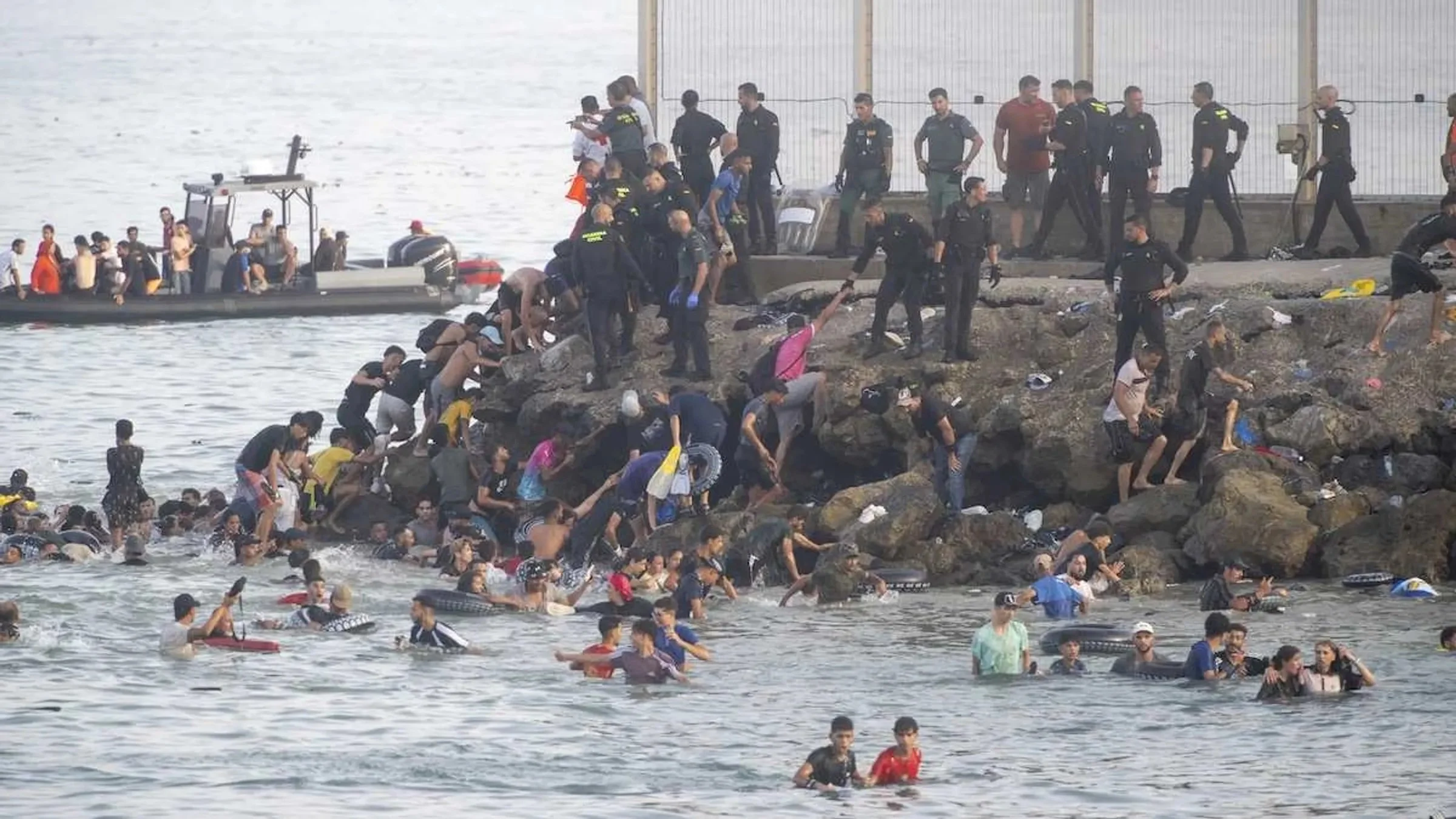
Dozens of migrants celebrate having crossed the border between Ceuta and Morocco in Madrid, Spain on July 31, 2026, as thousands entered the autonomous city by swimming and on foot, skirting the breakwater that separates Ceuta from Morocco, while border control units recovered the bodies of 16 people in the last 24 hours, bringing the total number of foreign nationals found dead in Ceuta’s waters this year to 47. Credit:Marcos Moreno/Europa Press/ABACAPRESS.COM
The images were striking: Last week’s chaotic sea crossing saw an estimated 60,000 migrants from Morocco flood into the tiny Spanish exclave of Ceuta in North Africa, swimming around seawalls and climbing over fences. At least 72 people lost their lives, according to Spain. The unprecedented surge stunned European governments and prompted EU ministers to hold an emergency meeting on strengthening the bloc’s borders.
The fallout also highlighted opposition to Spain’s migration policy within the EU. Poland, Denmark and Germany characterized Spain’s migrant-friendly policies – among the most welcoming in Europe – as “pull factors,” encouraging the surge and even threatening EU security. Italy said it was temporarily suspending its Schengen agreement with Spain, which allows passport-free travel across 29 European countries. Sweden and Finland joined the chorus, with Finnish Interior Minister Mari Rantanen writing on X last week that “Spain has completely failed to protect the external border of the Schengen area from incursions. This cannot continue.” Read more